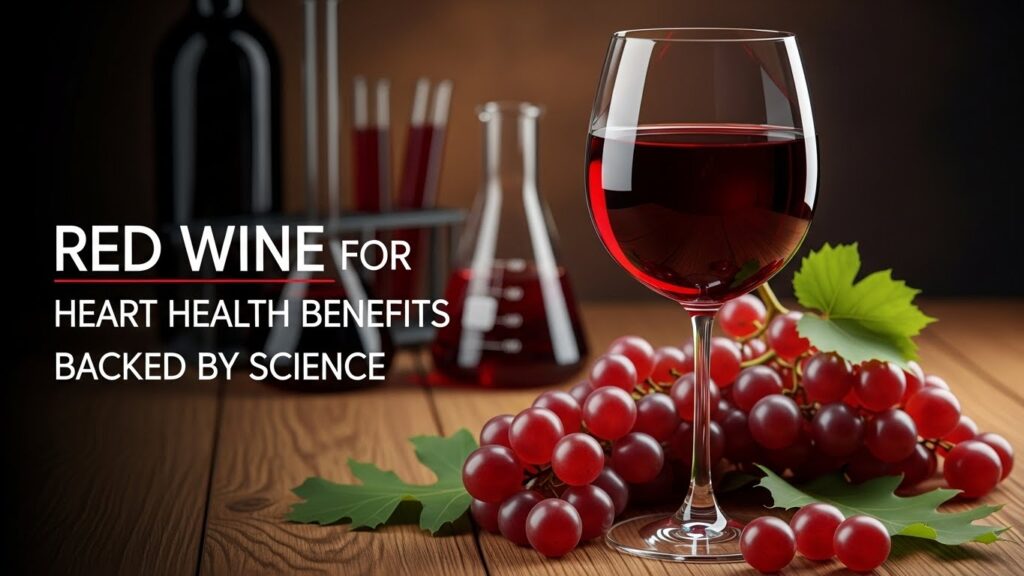
Red wine has occupied a unique intersection of culture, cuisine, and health for a long time. From Mediterranean family meals to the relaxed traditions of rural France, people have long associated red wine with a healthy, enduring life. Recently, scientists have taken a closer, more serious look into whether that old wives tale actually holds up to modern scientific scrutiny. And what we’re finding out is that red wine for heart health is actually showing some real promise – as long as it’s consumed in moderation, as part of a healthy lifestyle that includes regular exercise and a balanced diet.
This article looks into what the science actually says about red wine and heart health. It explains how the specific compounds work within the body, what kind of consumption levels are likely to be beneficial, and who should just avoid it altogether. Its not here to promote drinking, but to give a balanced and honest view, based on evidence. We’re aiming for a view that is in line with the EEAT principles that Google promotes : experience, expertise, authoritativeness and trustworthiness.
Ruminating on Heart Health and Lifestyle Factors
Cardiovascular disease is still one of the top causes of death worldwide. It includes things like coronary artery disease, heart attacks and strokes – and a lot of these are down to the lifestyle choices you make, like what you eat, how much you exercise, how you handle stress, whether or not you get enough sleep and whether or not you smoke.
Looking at dietary patterns, some foods and drinks are of more interest to us than others because of their potential to help. Fruits, vegetables, whole grains, healthy fats and fermented foods all get a lot of attention. In this context, red wine is a particularly interesting subject – largely because of its unique composition and long history of use.
When we talk to experts about red wine and heart health, they say that no single food or drink is going to be a magic bullet. What’s more likely to make a difference is how red wine fits in with a larger pattern of moderation and balance and overall wellness.
What Sets Red Wine Apart from Other Boozy Beverages
Not all alcoholic drinks are the same. Beer, spirits and wine are all made different ways and contain different compounds. Red wine stands out because its made with grape skins, seeds and stems, which are all rich in plant-based compounds called polyphenols.
Polyphenols are natural antioxidants that you’ll find in lots of fruits and vegetables. Red wine contains resveratrol, flavonoids, catechins, and tannins, and researchers believe these compounds play a key role in why they study red wine so extensively for its potential impact on heart health.
Winemakers typically ferment white wine without grape skins, which lowers its antioxidant levels. Spirits contain only alcohol and lack the beneficial plant compounds found in wine.
The Science Behind Red Wine and Heart Health
Interest in red wine really took off when researchers observed the phenomenon now known as the ‘French Paradox.’ They studied why the French population showed surprisingly low rates of heart disease despite consuming diets rich in saturated fats, and they theorized that regular, moderate consumption of red wine with meals explained the difference.
Since then, loads of observational studies and clinical trials have been done to look at the relationship between red wine and heart health. They haven’t all come up with the same answer, but some pretty consistent findings have started to emerge.
Red wine in moderate amounts seems to be associated with:
- Higher levels of that “good cholesterol” you keep hearing about, high-density lipoprotein (HDL)
- Less of that nasty LDL (low-density lipoprotein) oxidizing, which is a bit of a factor in how plaques form
- Better endothelial function – in other words, your blood vessels are healthier
- Lower markers of inflammation, which is linked to heart disease
Remember though, it’s all about associations here – no guarantees. Genetics, your lifestyle, and your overall diet are all going to have a huge impact on how this all plays out.
Red Wine Antioxidants and Heart Health
Of course, one of the big stars of the show when it comes to red wine is its antioxidants. These chaps help neutralize free radicals – literally unstable molecules that can cause damage to your cells and contribute to all sorts of chronic disease.
Resveratrol
Resveratrol is probably one of the most famous antioxidants found in red wine. It’s mainly hanging out in grape skins, and has been studied for the potential to reduce inflammation and reverse the signs of aging. In test tube studies, resveratrol has been shown to:
- Help your blood vessels function properly
- Reduce your risk of clotting (which can be bad news for your heart)
- Switch on genes that are linked to longevity – which we all want
Now, the amount of resveratrol in a glass of red wine isn’t going to be as much as you’d get from a supplement, but the fact that it’s in there at all contributes to the broader mix of antioxidants that are good for your heart health.
Flavonoids and Polyphenols
Flavonoids are another bunch of antioxidants you’ll find in red wine – and you’ll also find them in things like berries, dark chocolate and tea. These chaps are associated with better blood pressure control and less stiffness in your arteries.
When people talk about red wine antioxidants for heart health, they always stress that it’s not just one compound doing all the work on its own. It’s the combined effect of all these different antioxidants that’s the key.
Blood Pressure, Cholesterol and Circulation
Keeping your blood pressure and cholesterol levels under control is key to good cardiovascular health – and a few studies have suggested that moderate red wine intake might have a positive impact in these areas.
Cholesterol Balance
Moderate drinking—including red wine—raises levels of the ‘good cholesterol’ known as high-density lipoprotein (HDL). HDL helps remove excess cholesterol from your arteries and carries it back to the liver, where the body safely eliminates it. That’s a lot less fun for your arteries, and it reduces your heart disease risk.
Blood Vessel Function
The polyphenols in red wine appear to help with the production of nitric oxide – which is great for your blood vessels, because it helps them relax and improve your circulation. When your circulation is better, your heart doesn’t have to work so hard to get blood pumping around your body.
All of which helps explain why red wine is still being looked at in relation to long-term heart health outcomes.
Inflammation and Oxidative Stress – The Heart Connection
Researchers now recognize chronic inflammation as a major factor in heart disease, and oxidative stress—driven by the constant battle between free radicals and antioxidants—damages blood vessels and accelerates the ageing process.
Red wine has some pretty impressive antioxidant properties that may help reduce oxidative stress and calm down inflammation. A few studies have shown that moderate red wine drinkers tend to have lower levels of C-reactive protein (CRP) – a marker for inflammation – compared to non-drinkers or heavy drinkers.
Just to be clear, though, red wine isn’t some kind of cure for heart disease – it’s more likely to be one useful piece of the jigsaw in a healthy lifestyle.
How Much Red Wine is ‘Moderate’ Anyway?
One of the key things to get your head around is what ‘moderate’ actually means when it comes to drinking. Official guidelines from around the world vary a bit, but generally speaking:
- Women should stick to up to a small glass (about 150ml or 5oz) per day
- Men can have up to two small glasses a day
Go over those limits, and you start to increase your risk of high blood pressure, liver disease, addiction, and certain cancers. Any potential heart benefits get wiped out by overindulging.
When experts do give a nod to red wine and heart health, they’re usually talking about low to moderate consumption, and actually enjoying it with meals.
Who Should Give Red Wine a Wide Berth
While there are some benefits to be had from red wine, there are some people who’d be better off giving it a miss. These include:
- If you’ve got a history of drinking problems
- If you’ve got liver disease
- If you’re pregnant or breastfeeding
- If you’re on medication that doesn’t get on with booze
- If your healthcare provider has told you to steer clear
In those cases, you can still get the antioxidant benefits from other foods like grapes, berries, pomegranates, olive oil and green tea.
Red Wine in the Mix of a Healthy Lifestyle
The thing is, research shows that red wine on its own won’t give you good heart health – it needs to be part of a wider lifestyle approach. So, let’s look at red wine in the context of healthy living.
Pair Your Red Wine With A Nutritious Meal
People following a traditional Mediterranean-style diet often enjoy red wine with meals rich in vegetables, legumes, whole grains, fish, and healthy fats. Eating like this can really slow down the way your body absorbs the booze and gives you lots more antioxidants from your food.
Get Moving – Regular Exercise is Key
Staying active is not just good for your cardiovascular fitness, but also your blood pressure and insulin sensitivity. And when you combine that with moderate red wine consumption, the effects can be really impressive.
Manage Your Stress and Get Some Sleep
Chronic stress and poor sleep are major inflammation impostors – so make sure you’re getting enough rest and finding ways to keep your stress levels in check.
And, for Goodness Sake, Don’t Smoke
Smoking is like a nuclear bomb for blood vessels – it completely cancels out any potential benefits from drinking red wine.
Common Myths About Red Wine Buste
Myth 1: Drinking More Red Wine Will Make You Healthier
Nope – this is a major misconception. Drinking too much can actually cause real problems with your heart rhythm, weaken your heart muscle and increase your stroke risk.
Myth 2: Non Drinkers Should Just Start Drinking Red Wine
Health professionals generally advise against non-drinkers starting to drink on health grounds. You can actually get all the antioxidant benefits you need from other non-alcoholic foods.
Myth 3: All Red Wines Are Healthier
The antioxidant content in red wine varies enormously depending on the type of grapes used, the climate theyre grown in and the methods used in the winemaking process. On the whole, dry red wines with a deep colour tend to have a higher polyphenol count.
What Current Research is Still Bickering About
While lots of studies have suggested a link between red wine and heart health, researchers are still having a debate about the underlying causes. Some people reckon that moderate wine drinkers are simply more likely to be generally healthier, earn more money or have better access to medical care.
Its also super difficult to set up a proper trial involving alcohol for ethical reasons which makes drawing any firm conclusions a bit tricky. So the scientific consensus tends to be cautiously optimistic rather than making any bold claims.
Practical Takeaways for Those with a Heart On Their Mind
For people who already drink red wine, the evidence says that a little bit of it can fit into a heart-healthy lifestyle. And for those who dont drink, theres no need to start.
The key points that science backs up are:
- Red wine and heart health are linked to the antioxidant content, not just the booze itself
- The benefits only really kick in with low to moderate drinking
- The lifestyle you lead is way more important than any single drink
- If you dont drink, you can get the same protective compounds from non-alcoholic alternatives
Final Thoughts
The idea that red wine is good for the heart isnt a myth, but its also not a free pass. What the science suggests is that moderate red wine consumption in the context of a pretty healthy diet may actually have some benefits for your cardiovascular health. These benefits are largely because of the antioxidants and polyphenols which can help keep your blood vessels in good nick and keep your cholesterol levels in check.
But red wine isnt essential for heart health – and its not for everyone. The best protection against heart disease still comes from a balanced diet, regular exercise, stress management and proper medical care.
Red wine can be a nice little addition to a healthy lifestyle – approached in the right way, that is. By practicing moderation, applying common sense, and staying aware of your health needs, you enjoy red wine not as a magic cure but as a small, culturally rich part of a heart-conscious lifestyle grounded in fact.
Read Out our latest article at: Discover Natural Remedies for Congestive Heart Failure
Health Disclaimer: The information provided in this article is for educational and informational purposes only and is not a substitute for professional medical advice, diagnosis, or treatment. Always seek the advice of your healthcare provider with any questions you may have regarding a medical condition.